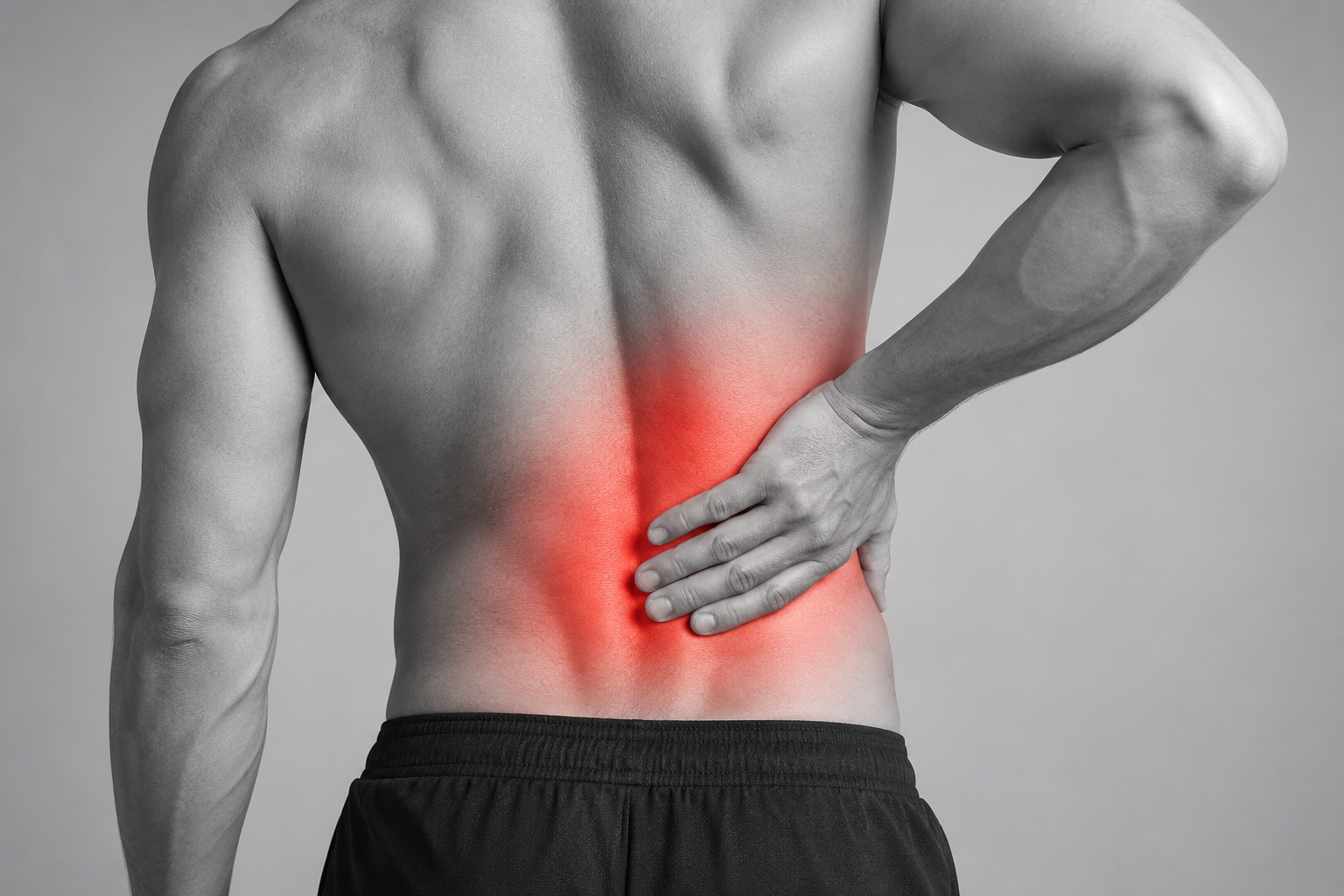
5 Common Causes of Lower Back Pain — and How Remedial Massage Can Help
Lower back pain has a handful of common causes, from muscle strains to disc issues. Here's what's behind each one and how remedial massage can help.
Lower back pain is one of the most common health complaints around, affecting most people at some point in their lives. It can range from a dull, nagging ache to sharp pain that makes everyday movement difficult. While the causes vary widely, a handful of conditions account for the vast majority of cases we see in clinic.
Below are the five most common causes of lower back pain, ranked from most to least frequent, along with how remedial massage can help address each one.
1. Muscle and Ligament Strains
By far the most common cause of lower back pain is a strain or sprain of the muscles, tendons, or ligaments that support the spine. These injuries typically happen from lifting something heavy with poor technique, twisting awkwardly, sudden movements like a sneeze or a fall, or simply overloading muscles that aren't conditioned for the activity. The result is microscopic tearing in the tissue, followed by inflammation, swelling, and protective muscle spasm — which is often what causes the sharp, localised pain and stiffness people feel.
How remedial massage helps: This is the type of pain remedial massage is especially well suited to treating. Techniques such as deep tissue work and trigger point therapy release tight, spasming muscles and reduce the guarding response that keeps the area locked up. Improved blood flow to the injured tissue helps clear inflammation and deliver the oxygen and nutrients needed for repair, while gentle stretching and mobilisation restore normal movement patterns so the strain doesn't become a recurring problem.
2. Poor Posture and Prolonged Sitting
With so many of us spending long hours at a desk, in a car, or hunched over a phone, postural strain has become one of the leading contributors to lower back pain. Sitting for extended periods — especially with poor alignment — places sustained load on the lower back, shortens the hip flexors, and weakens the muscles that should be supporting the spine. Over time this creates muscle imbalances: some muscles become tight and overactive while others become weak and underused, pulling the pelvis and spine out of their natural alignment.
How remedial massage helps: Remedial massage addresses the muscular imbalances that build up from poor posture by releasing chronically tight areas (commonly the lower back, hip flexors, and glutes) while improving circulation and mobility in the joints that have become restricted. Many therapists also combine this with targeted stretching and simple postural advice, helping clients build awareness of their alignment during the day so the pain is less likely to return.
3. Herniated or Bulging Discs
The discs that cushion the vertebrae can bulge, tear, or herniate, particularly at the lower levels of the spine where load is greatest. This can happen gradually through wear and tear or suddenly through injury. When a disc bulges enough to press on a nearby nerve, it can cause not only local back pain but also sciatica — pain, tingling, or numbness that radiates down through the buttock and leg.
How remedial massage helps: While massage cannot repair a damaged disc directly, it plays a valuable role in managing the symptoms. Releasing the tight, protective muscle spasm that often surrounds a disc issue can reduce nerve irritation and ease referred leg pain, while improved circulation supports the body's own healing processes. Massage is generally used alongside guidance from a GP, physiotherapist, or chiropractor for disc-related pain, and a good therapist will always check for red-flag symptoms (such as numbness, weakness, or loss of bladder or bowel control) that need urgent medical attention rather than massage.
4. Osteoarthritis and Degenerative Disc Disease
As we age, the discs and joints of the spine naturally lose some of their hydration, cushioning, and cartilage. This degeneration is extremely common — disc changes are present in most adults over 50 — but it becomes symptomatic when it leads to inflammation in the small facet joints of the spine or narrowing of the space around the nerves. This typically causes stiffness and aching that's worse first thing in the morning or after periods of inactivity.
How remedial massage helps: Massage won't reverse degenerative changes, but it's highly effective at managing the muscular stiffness and compensatory tension that build up around arthritic joints as the body tries to protect them. Regular sessions can improve joint mobility, ease stiffness, and help maintain a better range of motion, making daily activities more comfortable and reducing reliance on pain medication for many clients.
5. Spinal Stenosis
Least common but still significant, especially in older adults, spinal stenosis is a narrowing of the spinal canal that puts pressure on the nerves running through it. It typically develops slowly due to degenerative changes and often causes pain, heaviness, or weakness in the legs that worsens with walking or standing and eases with rest or bending forward.
How remedial massage helps: For stenosis, massage is generally used as a supportive therapy rather than a primary treatment. It can help relax the secondary muscle tension that develops as the body compensates for nerve compression, improve local circulation, and support overall mobility. As with disc-related pain, stenosis should be properly diagnosed and monitored by a medical professional, with massage used as part of a broader management plan.
When to See a Massage Therapist — and When to See a Doctor
Remedial massage is one of the most effective tools available for the muscular tension, poor posture, and mechanical strain that cause the majority of lower back pain cases. It works by releasing tight muscles, improving circulation, restoring mobility, and helping the body recover from everyday wear and tear — often preventing minor issues from becoming chronic ones.
That said, massage works best as part of a complete approach to back health, and it isn't a substitute for medical diagnosis. If your pain is severe, doesn't improve after a couple of weeks, or comes with numbness, weakness, fever, or changes in bladder or bowel function, see a doctor before booking a massage.
For everyday aches, tension, and stiffness, though, regular remedial massage can make a real difference — easing pain now and helping prevent it from coming back.
Ready to get relief from your lower back pain? Book a remedial massage session today.